
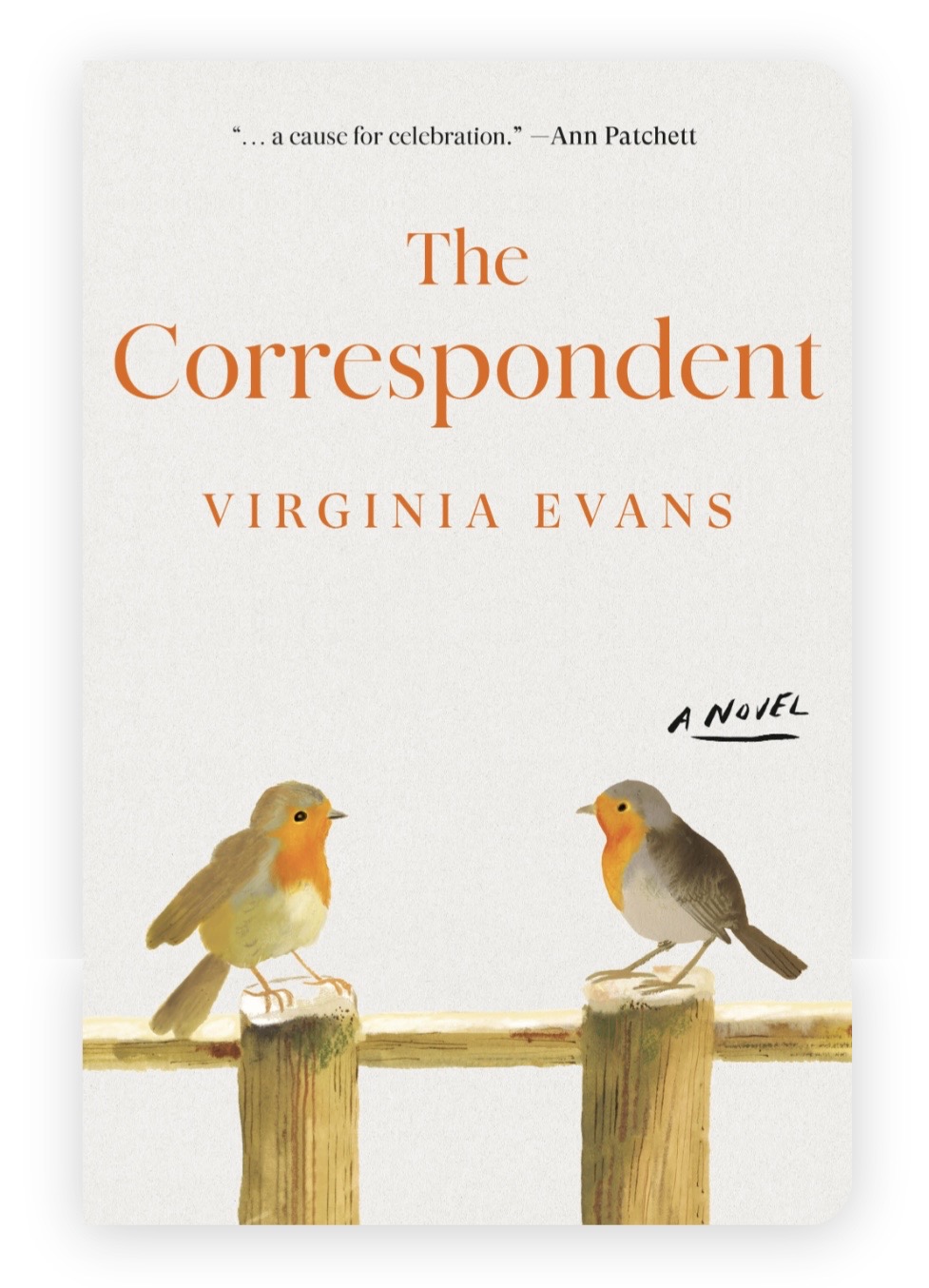
 Sybil Van Antwerp – our heroine – is the kind of neighbor you might like, or might not. She’s smart, retired, divorced, and keeps to herself. When her past comes calling – stalking, really – she can’t ignore it this time. It doesn’t hurt that a couple of amorous gentlemen come calling as well. Both tragedy and comedy lace the pages of this ultimately hopeful novel. Did you like prickly Olive in Olive Kitteridge? Did you love the earnest goodness at the heart of “Ted Lasso”? This #1 New York Times bestseller might be just the spring read for you.
Following is a more detailed summary from one of my favorite sources, Kirkus Review, and three Bacon observations.
From Kirkus Review:
A lifetime’s worth of letters combine to portray a singular character.
Sybil Van Antwerp, a cantankerous but exceedingly well-mannered septuagenarian, is the titular correspondent in Evans’ debut novel. Sybil has retired from a beloved job as chief clerk to a judge with whom she had previously been in private legal practice. She is the divorced mother of two living adult children and one who died when he was 8. She is a reader of novels, a gardener, and a keen observer of human nature. But the most distinguishing thing about Sybil is her lifelong practice of letter writing. As advancing vision problems threaten Sybil’s carefully constructed way of life—in which letters take the place of personal contact and engagement—she must reckon with unaddressed issues from her past that threaten the house of cards (letters, really) she has built around herself. Sybil’s relationships are gradually revealed in the series of letters sent to and received from, among others, her brother, sister-in-law, children, former work associates, and, intriguingly, literary icons including Joan Didion and Larry McMurtry. Perhaps most affecting is the series of missives Sybil writes but never mails to a shadowy figure from her past. Thoughtful musings on the value and immortal quality of letters and the written word populate one of Sybil’s notes to a young correspondent while other messages are laugh-out-loud funny, tinged with her characteristic blunt tartness. Evans has created a brusque and quirky yet endearing main character with no shortage of opinions and advice for others but who fails to excavate the knotty difficulties of her own life. As Sybil grows into a delayed self-awareness, her letters serve as a chronicle of fitful growth.
An affecting portrait of a prickly woman.
***
Three Bacon Observations:
1. On What We Imagine
Each morning, I receive a “First Light” daily thought from St. Mary’s Sewanee. One day recently, this message arrived:
Keep some room in your heart for the unimaginable.
Which is basically saying: imagine it.
Imagine the thing you cannot or do not hope for because it is too good, or too wonderful.
The Correspondent does just this.
It imagines what genuine reconciliation might look like, after relationships have ruptured beyond – it seems – repair. In particular, it considers the peace and love that might grow between divorced spouses and between a parent and an estranged child.
The Correspondent also imagines what it might be like for a 73-year-old woman to be courted by two ardent gentlemen suitors; for her to play a major, life-changing role in an autistic boy’s life; for her to be interviewed for a school assignment, which then leads to a speaking invitation. Underlying these plot points are certain truths: we wish to feel desirable at every age. We wish to live a meaningful and purposeful life. We wish to be seen and heard. Evans masterfully taps into these desires.
It would give away too much if I revealed some of the other things The Correspondent imagines. It’s a lot (too much?). And also: beautiful.
I would never fault a book for offering hope.
The question, I suppose, is whether the hope is offered through a story you want to read.
The pages kept turning as I read The Correspondent.

2. An Epistolary Novel
The Correspondent reminded me that I, too, could sit down and write a letter.
One question an epistolary novel asks is: how do you want to connect with people in this vexing and astonishing world?
What do we gain when we connect by the written word (email, text, or letter) versus the spoken word, or through being in someone’s company? What do we lose?
I am encouraged to add some more handwritten correspondence to my diet. We’ll see if I follow through.
3. The Author’s Story
There aren’t many epistolary novels that make it to #1 on the New York Times Bestseller list or similar cultural prominence. A few examples: The Color Purple, by Alice Walker (1982); The Guernsey Literary and Potato Peel Society, by Mary Ann Shaffer and Annie Barrows (2008); Griffin and Sabine, by Nick Bantock (1991); and 84, Charing Cross Road, by Helene Hanff (1984). Chat GPT also reminded me that Bram Stoker’s Dracula (1897) and Mary Shelley’s Frankenstein (1818) are epistolary novels.
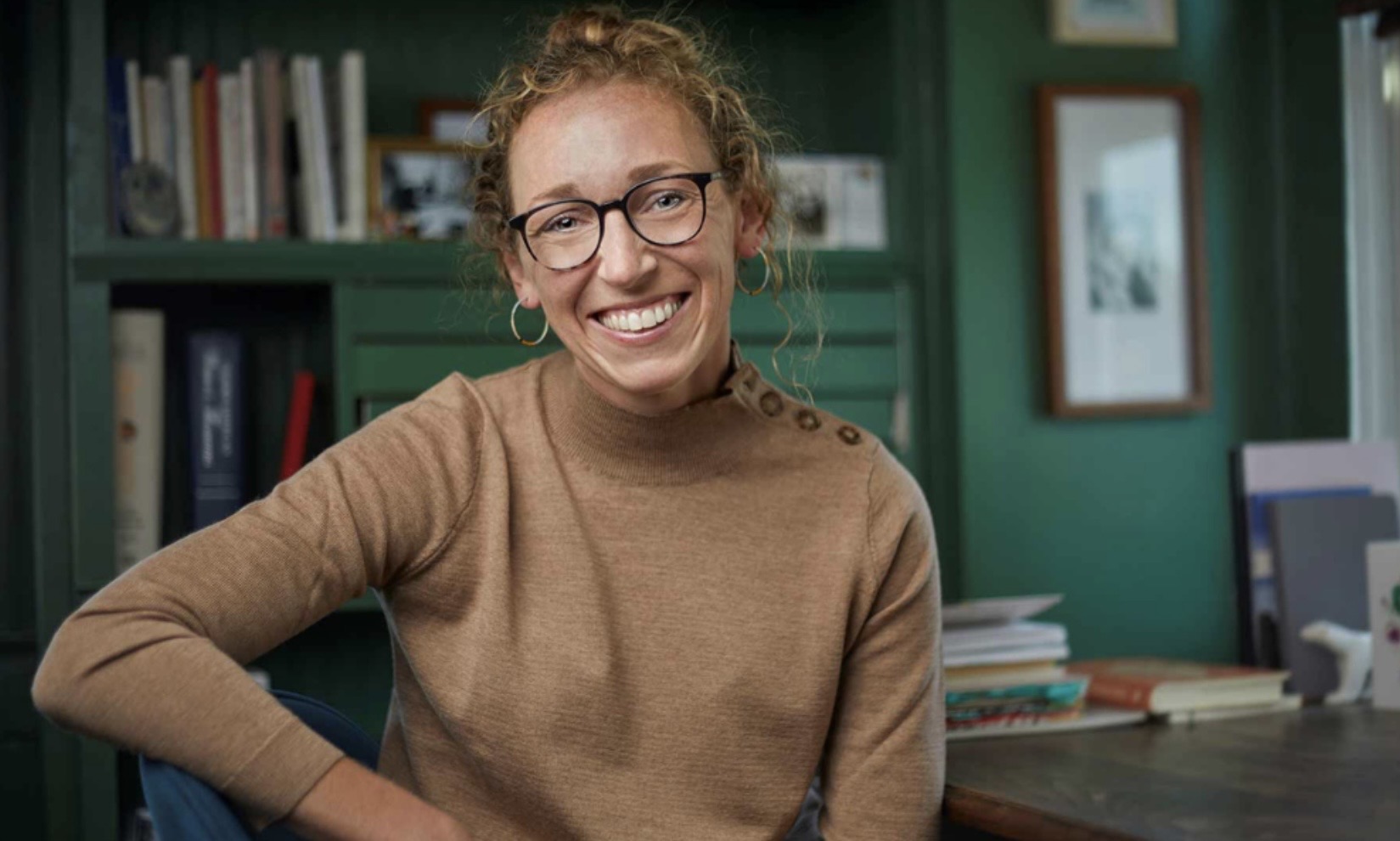
Virginia Evans, 39 years old, wrote seven novels over 18 years before The Correspondent. She reached out to hundreds of literary agents in New York, all of whom rejected her manuscripts. In April of 2021, a Canadian literary agent read The Correspondent and championed it.
The novel was published in April of 2025. Usually a book will reach the bestseller list – if it’s going to – in the week or two immediately after publication. The Correspondent didn’t top the New York Times bestseller list until 5 months after publication. “It’s a total unicorn,” said Ann Patchett. (Theo of Golden is another; more on that next week.)
From Jeffrey Trachtenberg’s article in the Wall Street Journal:
“Evans’s occasional pen-pal relationship with Patchett helped launch the book. Their ties date back nearly a decade, when Evans wrote to Patchett praising her novel “Commonwealth.” To Evans’s surprise, Patchett wrote back, thanking her for commenting on something that meant a lot to her and praising Evans’s penmanship.
Patchett provided a cover blurb for “The Correspondent,” a dusting of star power that helps attract bookstore browsers. Adding to the whimsy the book contains a fictional congratulatory letter from the heroine to Patchett regarding her novel “State of Wonder.”
In July, during an appearance on “PBS NewsHour,” Patchett recommended “The Correspondent” as a top summer read. She told the audience she initially doubted it would break out because “epistolary novels usually don’t work.”
Today, Patchett believes word-of-mouth made the difference. Whenever she goes to the grocery store or is walking her dog, somebody stops her to say they are reading the book. “the only thing that sells a book is one person reads it and tells two others to read it,” Patchett said in a phone interview. “And that’s what she’s getting.”
Good for Evans.
I like her story as much as I like her book.
Another thought: in 2023 – the latest year for which there are complete statistics – there were approximately 2.6 million self-published novels in the United States. If Evans hadn’t found a champion in the Canadian literary agent, her book may well have been among them.
Virginia Evans has been seen and heard in the way she wanted to be.
How do you want to be seen and heard in the world?
***


Beautiful pics and prose. I too find the First Light helpful. It is one of the first emails I open. Peace, LaMon
Thank you for staying in touch, LaMon, and for your kind words… xoxo
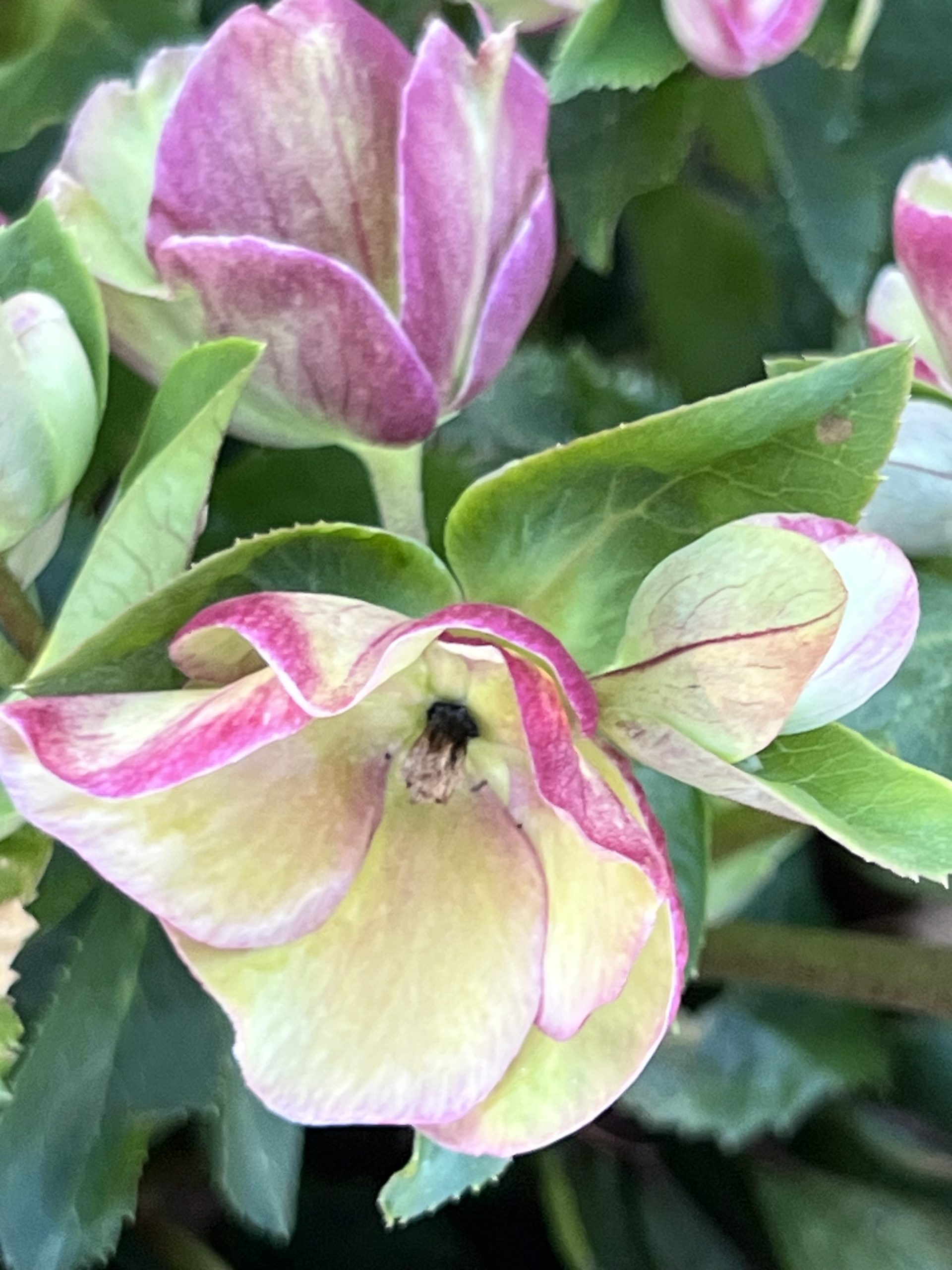
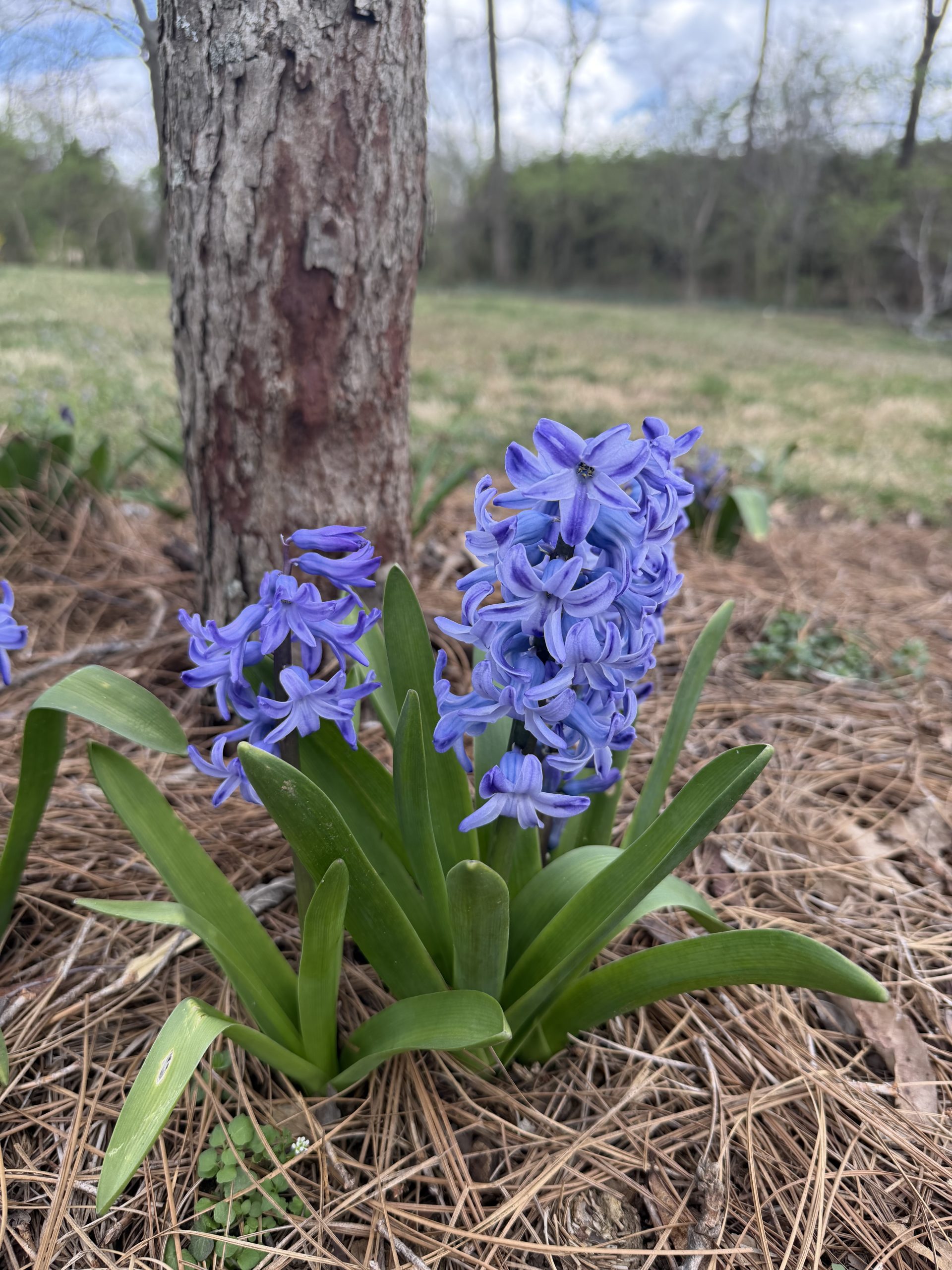
I did not know about the Ann Patchett connection to The Correspondent! Thank you for this post, especially the glorious hyacinths.
I love a hyacinth too. And – I think Ann would adore your penmanship too! Xoxo
Terrific read for us men, too!
I am so interested to hear that, John! I was wondering if it would appeal to men. Xoxo
I would add Helen Cartwright of Sipsworth to your list of Sybil Van Antwerp look-a – likes.
Can’t wait to read your take on Theo..bet it’s not the same as mine!
Okay you’ve totally intrigued me, Nancy… dying to hear what you think of Theo of Golden! Xoxo
I’m so glad you wrote about this book, Jennifer. I was a little dubious when I began reading it, wondering how Sybil’s letters could propel an entire novel. By, oh, page twenty, I couldn’t put it down. I became totally absorbed in her world. And delighted by the laugh-out-loud moments.
I generally don’t feel compelled to recommend bestsellers—they’re already bestsellers—but I recommend this book to everyone. And I love knowing the story of Virginia’s path to publication. And I admit: I love the cover!
Hi, Kim! It’s so nice to hear from you! I liked the cover too, though the birds kind of chirp “lady reader, lady reader.” I wondered if the cover was limiting, in any way. Given its #1 NYT bestseller success – perhaps not! Xoxo
Good Morning … I always smile when I see “Bacononthebookshelf” in my email stack.
Thank you for sending this review and the beautiful photos.
There were so many threads of theme and poignant ideas in The Correspondent that helped to create such a deep reality of Sybil’s life; I related to her story.
Her writing stimulated me to look at the threads of my long life with the respect I felt for Sybil.
Thank God for books and for your posts!
Blessings
Blessings to you as well, dear Paulette. I always smile when I hear from you. I feel your open, generous heart from many miles away. And feel grateful to be sharing the journey with you, even in a limited way. Xoxo
Thank you for adding more to the backstory about the author! Such a great, easy read. A delight to read a book that highlighted the enjoyment, change, and possibilities for all as we age.
That is very well said, Katie! Thank you for being in touch – xoxo
Thank you, Jennifer! I loved The Correspondent and read it in less than 24 hours during the Ice Storm.
Hi Carolyn! I believe it! I loved seeing you last night… Xoxo
Couldn’t put it down!
It is remarkable to me that she could sustain the momentum and suspense so effectively through letters. I had a hard time putting it down as well! Xoxo
Letter writing at its best. Inspiring, actually.