
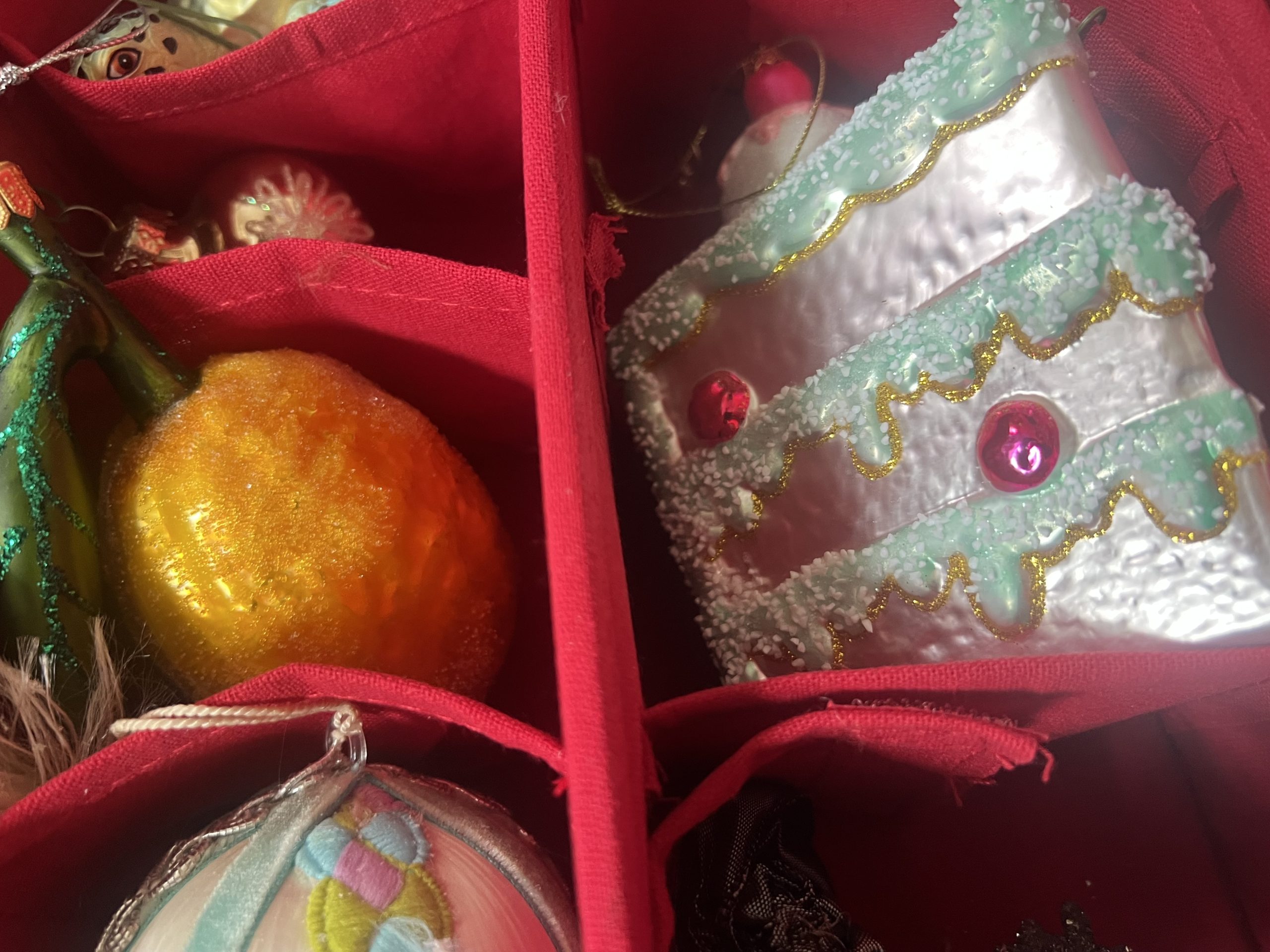
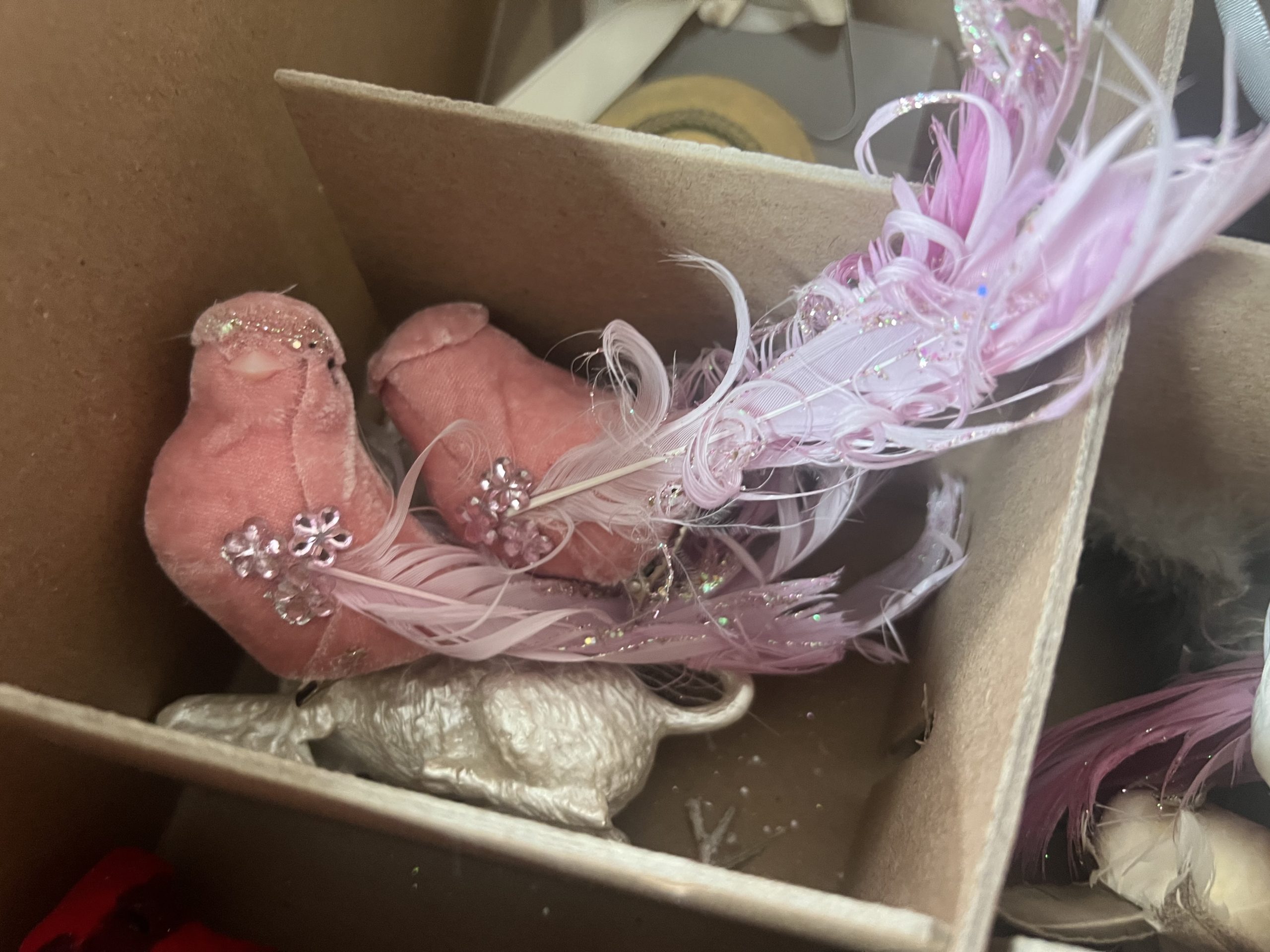
I took the ornaments off the tree and put them on the glass-top table in the sunroom. I felt ineffably sad doing so.
The ornaments rested on the table for several days. I felt overwhelmingly lazy and sluggish about getting them in boxes and up to the attic.
The Germans have delicious words for these feelings, Chat GPT told me. I’m feeling a bit better already!
🎄 Weihnachtsblues
…Germans use Weihnachtsblues to describe the emotional low after Christmas — when the lights come down, the gatherings stop, and everyday life returns. It’s not official or poetic, but it’s widely understood and very accurate for that post-holiday slump.
🕯 Wehmut
This is one of the best matches emotionally. Wehmut means a gentle, aching sadness tinged with affection and nostalgia. It’s the feeling of missing something even while being grateful it existed. Many Germans would absolutely describe the act of putting away Christmas decorations as being done “mit Wehmut.”
🍂 Vergänglichkeit
Not sadness itself, but the awareness of transience — that beautiful things pass. Christmas decorations going back into boxes are a perfect symbol of Vergänglichkeit, and the word often carries an emotional weight that feels quietly mournful.
And finally:
Weihnachtsdeko-Trägheit
literally: “Christmas decoration sluggishness”
“It’s not a fixed dictionary word, but Germans love compound nouns, and this one sounds completely natural and slightly humorous,” says Chat GPT. I think that means Chat GPT made it up. I’ll take it.
***
The (actual) German word that resonates most for me right now conveys the pathos of transience: vergänglichkeit. Along those lines, here’s a poem from The Four Seasons (Everyman’s Library Pocket Poets)…
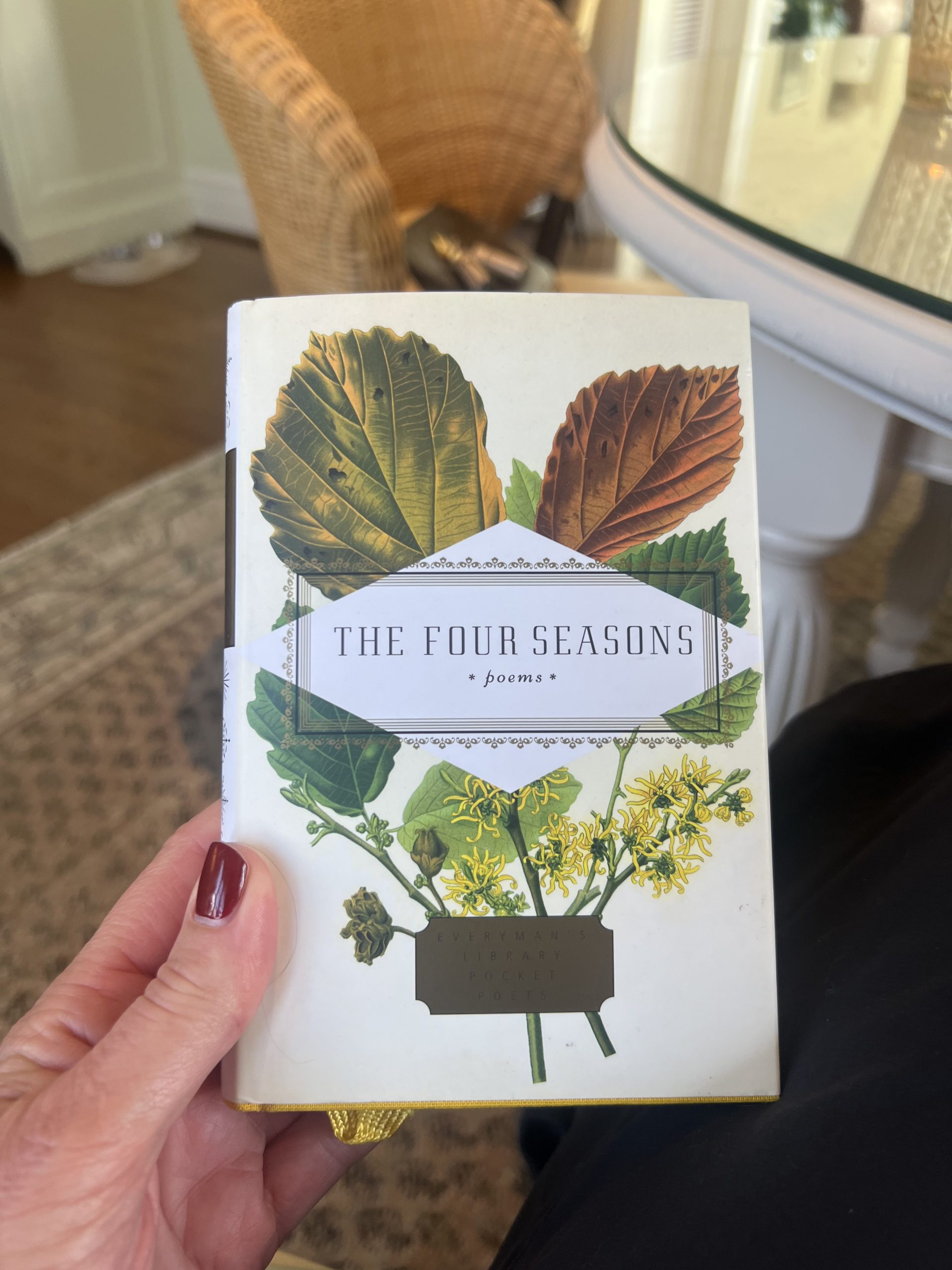
“The Night is Freezing Fast”
The night is freezing fast,
To-morrow comes December;
And winterfalls of old
Are with me from the past;
And chiefly I remember
How Dick would hate the cold.
Fall, winter, fall; for he,
Prompt hand and headpiece clever,
has woven a winter robe,
And made of earth and sea
His overcoat for ever,
And wears the turning globe.
by A.E. Housman
***
It seems to me wise to think of death at least once each day. That is to say: the transience of life.
Jennifer, thank you for this. I am hesitant to remove the signs of Christmas this year but I know I must! Thank you for these words and especially for the poem! Onward….
I think there must also be a German word for the feeling of relief when Christmas ornaments are put away. That’s what I’m feeling right now – and I hope you will be soon as well! Xoxo
Jennifer, I find this post timely. At my age, and especially at this time of year, I think about impermanence daily. Sic Transit Gloria Mundi.
I woke from a dream this morning that shook me down deep. For the first time since my mother’s death, she appeared in a dream as a healthy woman, rather than someone in the process of losing her mind. None of us knows what’s ahead, thank God. We can only try to appreciate the glory of the world as it passes, right? Xoxo
Jennifer, I immediately resonated with your “pathos of transcience” as a descriptor of “verganglichkeit.” I have sung Gustav Mahler’s “8th Symphony” several times, including with the Nashville Symphony Orchestra and Chorus. In this, Mahler uses the final part of Goethe’s “Faust” poem to end the symphony in the “Chorus Mysticus” finale. “Alles vergangliche ist nur ein Gleichnis (all that is transitory is but an image [or dream or illusion]). It’s very difficult to understand the existential philosophy being described, but, musically, it is heavenly! I listen to it often on YouTube!
Hi Bill! Thank you for inspiring me to revisit Mahler’s 8th! It makes me happy to hear from you. Xoxo
I’m sitting here beside my tree which is denuded of everything but its lights. I wish I could speak German with it…
I bet it is and was beautiful, Nancy… how quickly these days pass! Xoxo
Good Morning. My morning started well with reading your post. And now I have another book title to add to my cart! I usually hold out on taking decorations down until Epiphany. I assume we will do so again this year. Though we are preparing to move from B’ham to Boaz at beginning of February. Oh, and I think that William Law suggested regularly meditating on death at bedtime. Peace, LaMon
Thank you for being in touch, LaMon! Peace to you as well. Xoxo
Woke up at 5 am, today, and literally packed away the final ornaments and, with that burst of energy that only early morning gives, shoved the boxes up into the attic space (I’ll arrange it all later). I feel relief (some years in the recent past – most notably 5 years ago, when my father in law died at the end of December – I have not been able to organize myself to do it before the end of January). This year feels like smooth sailing already, since I have it all cleaned up. The canvas for 2026 is clean and ready for all kinds of creativity! Happy New Year!
I am so happy for you, Patricia! Yes the year is off to a great start in your home! Xoxo
Who would have guessed the German language is one of the richest for describing complex and specific emotions? Even more fun— pronouncing them aloud. It is such a harsh language that “I love you” sounds suspiciously like you are cursing at someone. As always, sending so much affection, beloved brilliant friend ✨
And to you, dear friend!! Xoxo