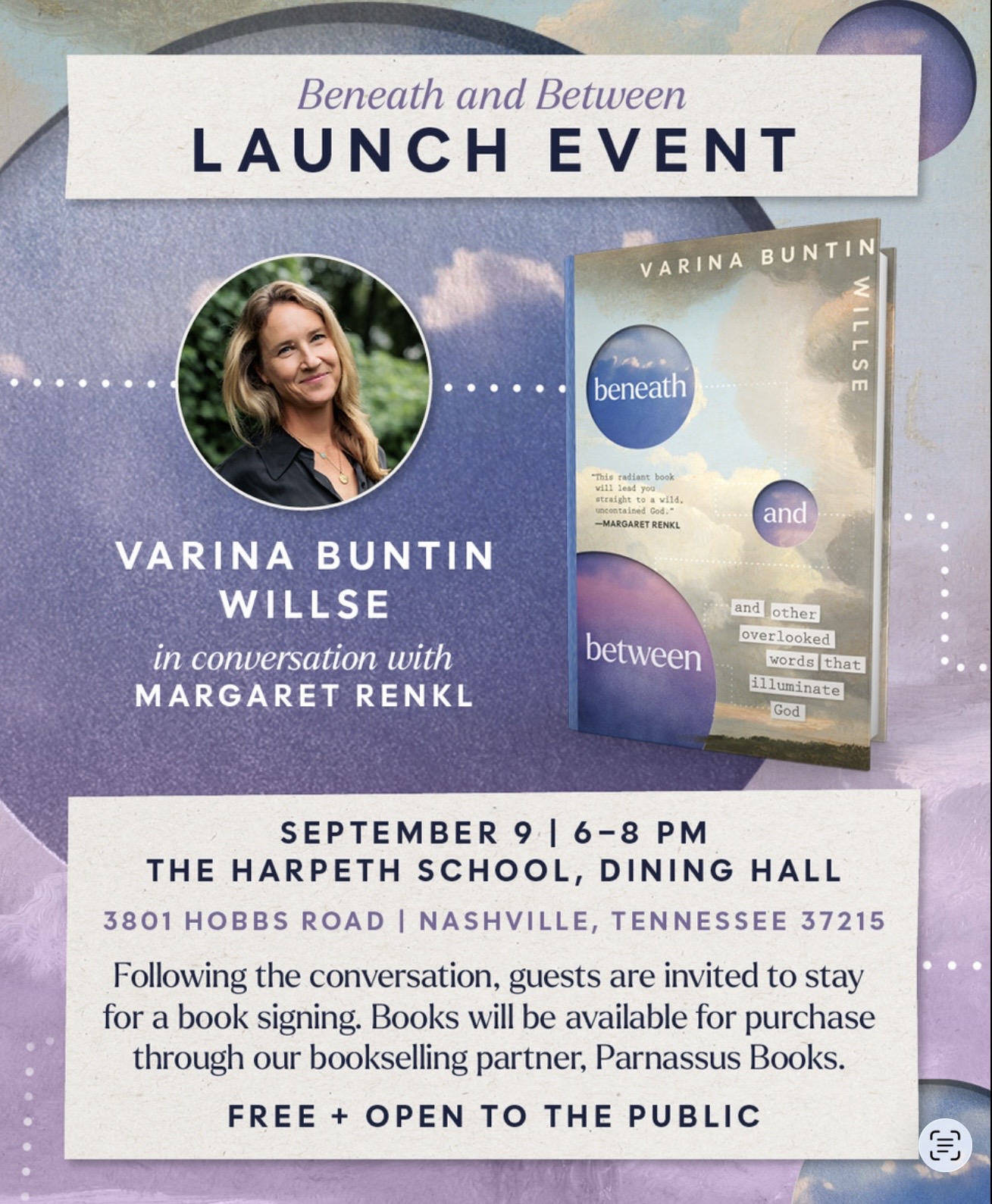
Varina Buntin Willse left an advance copy of her lovely new book in my mailbox the other day – “Beneath and Between: And Other Overlooked Words That Illuminate God.” For the spiritual seeker and someone who loves words, this book is a pleasure. It’s a cold lemonade on a hot afternoon; it’s a wildflower garden, carefully cultivated; it’s a walk on the yellow brick road. Most of all, and most beautifully – it’s the work of a woman not scared of her own voice.
Willse and Margaret Renkl will be talking about “Beneath and Between” at Harpeth Hall on September 9th. You will not want to miss this conversation! I can only imagine the sparks that will fly between these two extraordinary wordsmiths. Please register here:
I don’t know Varina. I have known of her for some years, as women tend to do in Nashville. She doesn’t hesitate to establish her independent streak in the early pages of the book. She’s not a joiner:
For a long time, my relationship with God had been intensely personal, and I liked it that way. I was not into Bible studies nor was I interested in small groups at church.
As a wife and young mother, she became a more active parishioner at Christ Church Cathedral in downtown Nashville. She began to feel communion profoundly: “I was no longer receiving the bread and the wine; I felt like I had become the bread and wine. Those bodies over there were separate from my body and yet were not. This was true, at first, of only my children. And then, slowly, it became true of all people and not only all people but all things. I felt myself expanding…”
Her spiritiual cravings intensified. She delved into the writings of Thich Nhat Hanh, Mary Oliver, and Richard Rohr, religious visionaries of our times (and some of my favorite authors and thinkers, as a sidenote).
She felt more and more at odds with the God she encountered at church, a God she felt was boxed in by the way we talk about “Him”:
When we do answer the questions Where is God?, What is God?, and Who is God? we tend to do so exclusively with nouns. We have named god God. Father. Lord. King. And we have located God in specific places: Heaven. Throne. Temple. Altar.
Hungry for a different understanding, she experienced a crisis of faith – and then a deepening of it. “I have been a heartbroken Christian,” she writes,” but I am not a retired one.”
Willse became convinced that a helpful way of understanding God is through prepositions, devoting a chapter to each one:
Above
Beneath
Near
With
Alongside
Before
For
Through
Into
Within
Throughout
Among
Between
Around
Beyond.
Getting close to God is “no longer a top-down situation,” Willse writes. “This wasn’t even two footprints on the sand. In this scenario, the Divine accesses us, and we access the Divine, in myriad, astonishing ways. Nouns can’t help us one bit. When we’re getting close to the holy, the ineffable, the sublime, we are now in the terrain of prepositions.”
It’s a bold proposition – that prepositions kind-of explain it all!
Willse characterizes her work as “outsider theology”, as she has no formal training at seminary or in theology. I’m not sure that’s quite the right term. Her careful and extensive reading of Scripture and wide knowledge of commentators and scholars in the Christian tradition are evident on every page.
Her book is earnest, careful and creative. I think it would be a perfect book for small group discussion, though I certainly enjoyed reading it on my own.
I’d love to share one passage with you, to give you a flavor and perhaps a lift today:
This is from the chapter on “Through”:
Near the end of my first pregnancy with our twin daughters, my feet were so swollen that I could wear no shoes, only slippers. I was a high school teacher then, and so I plugged through the halls in my slippers. I suggested to the teens in my class that if they were not ready for all this, my hand floating up and down the engorged frame of my body, they ought to take care to avoid activities that produce such transformation. They listened with wide eyes, eyes that betrayed a mix of disgust and wonder. There was a miracle being witnessed, but also a repulsion at the making of it.
As for me, having two bodies growing in my body – becoming, literally, room and board for other living people – was worth whatever I might go through. That included, when I reached thirty-five weeks of pregnancy, something more than any of us anticipated: the resolute, systematic, and highly dangerous shutdown of all my internal organs, one by one.
The acronym for this syndrome is HELLP, of all things. I did not know this was happening to me. Neither did the nurse who answered the phone when I called, the nurse who said if my contractions weren’t less than five minutes apart, I should stay home. Neither did my husband, who promised to stay up with me in my agony but was snoring in less than thirty minutes. I don’t blame him one bit. If I could have been snoring, I would have been. Instead, I was lying on the floor on my side, my bloated body sweating and aching, pain ripping through every cell of me, tears pooling in the rough nodules of carpet beneath my cheek. It was nightlong agony, and I had to go through it. And when we eventually went to the hospital and the surgeon made a neat incision across my lower abdomen, pulled open my flesh, and tugged out first one healthy baby girl and then another, I finally understood the fruits of all that nine-month-long labor. I finally understood that what you go through is what you become.
Once those chilrdren were alive and thriving in the world, I often read them the board book We’re Going on a Bear Hunt by Michael Rosen and Helen Oxbury. The book features an intrepid family of five- six if you include the dog – that sets out on an afternoon adventure and discovers all manner of obstacles: mud, blizzards, raging rivers, and scary forests. They were not unlike the band of weary travelers trying desperately to make it to the promised land. At each instance, the family repeats the mantra of the familiar chant: Can’t go over it. Can’t go under it. Gotta go through it. And onward they plunge, squelching through mud or angling against torrents of rain. The family persevered in their journey because they are impelled by an attitude of throughness.
Like it or not, God gives us ample opportunity to develop our throughness muscle. It is one of the things we like least about God and one of the things we understand least about God too. If God is benevolent and merciful, good and almighty, why does God allow such things as blizzards and mud fields to bar our way? Why do we not get the part or the job or the girl? Why do relationships have to end? Why can we not get pregnant? Why do lovely people get cancer? Why war and acrimony, abuse and crisis of all kinds? Why, why, why the suffering?
The pain of the world seems antithetical to a God who is Love. It might be easy for us to determine once again that there is no God. Or that if there is a God, she is punitive and not much worth worshipping. Reason would tell us this, but wisdom says something different. Reason would tell us suffering is something to be avoided, but wisdom would tell us that suffering is an opportunity for transformation. Reason would tell us suffering is a sign of an angry god or an absent god, but wisdom would tell us suffering is a path into the very heart of God.
With suffering, we can’t go over it. We can’t go under it. We gotta go through it. The experience of that hard throughness infuses our understanding, forms our identity, and induces our way of being in the world. Addiction and recovery. Illness and treatment. Loss and grief. Trauma and therapy. Labor and birth. Going through any of these, we cannot but come into new being. We cannot but become. This is what throughness is: the very hard but also very sacred work of becoming.
…Jesus models it for us, bravely and faithfully, when he gets betrayed, arrested, tortured, and executed, only to rise again in three days’ time. Only through the agony of crucifixion is there an experience of resurrection. Suffering guts us, and in that emptiness, the living waters rush through.
***
Willse ends each chapter with a prayer.
Here is her prayer at the end of the chapter on “Through”:
A Prayer to God Through
Through my lips, God, speak.
Through my eyes, see.
Through my body, move.
Through my heart love.
Through my suffering, transform.
Through my life, live.
Help me to be opened and ready.
Help me to second the motion of Love
Help me to let you flow,
through and through.
Amen.
***
Spotted in my garden this week:
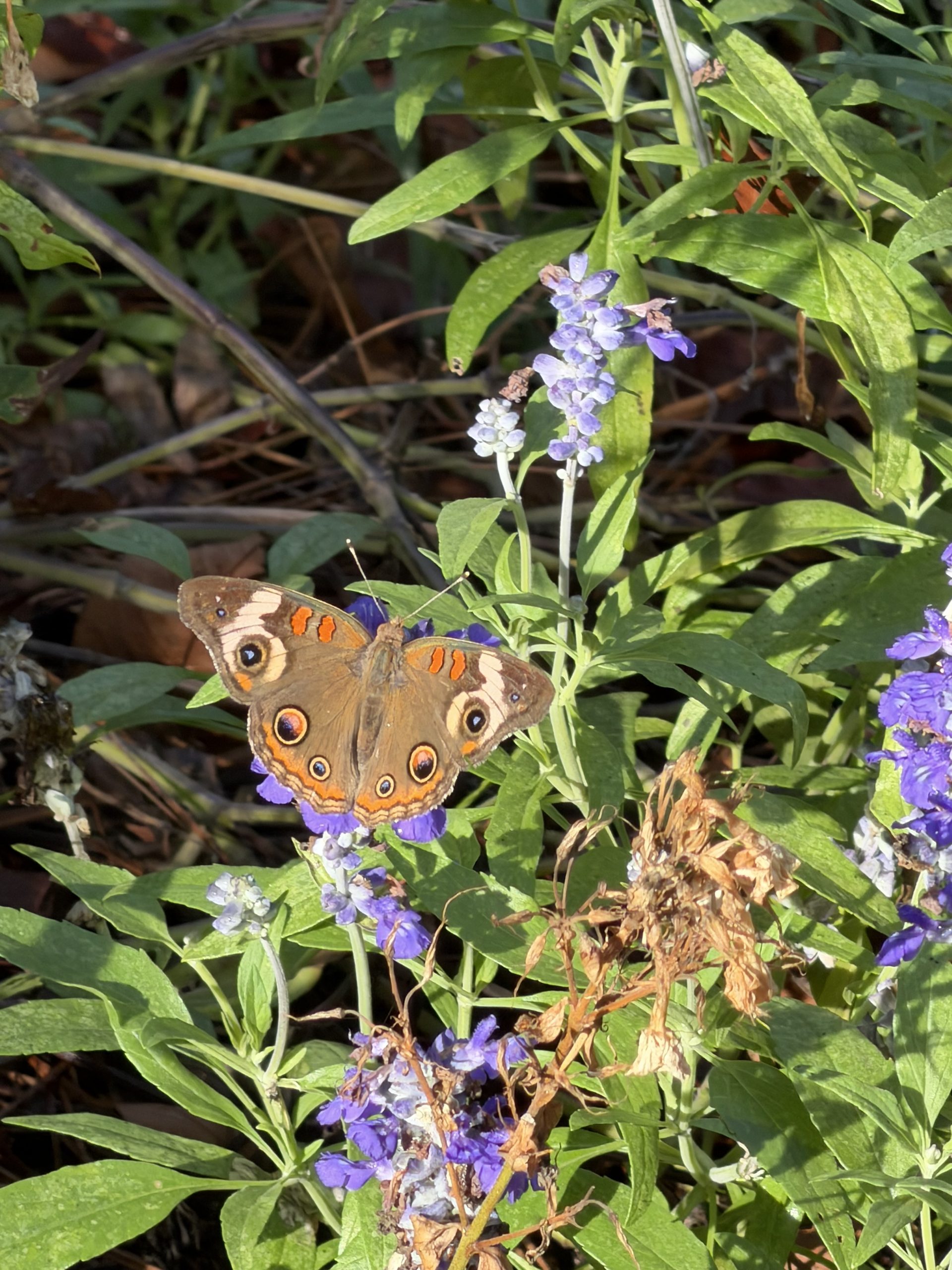
Common buckeye butterfly
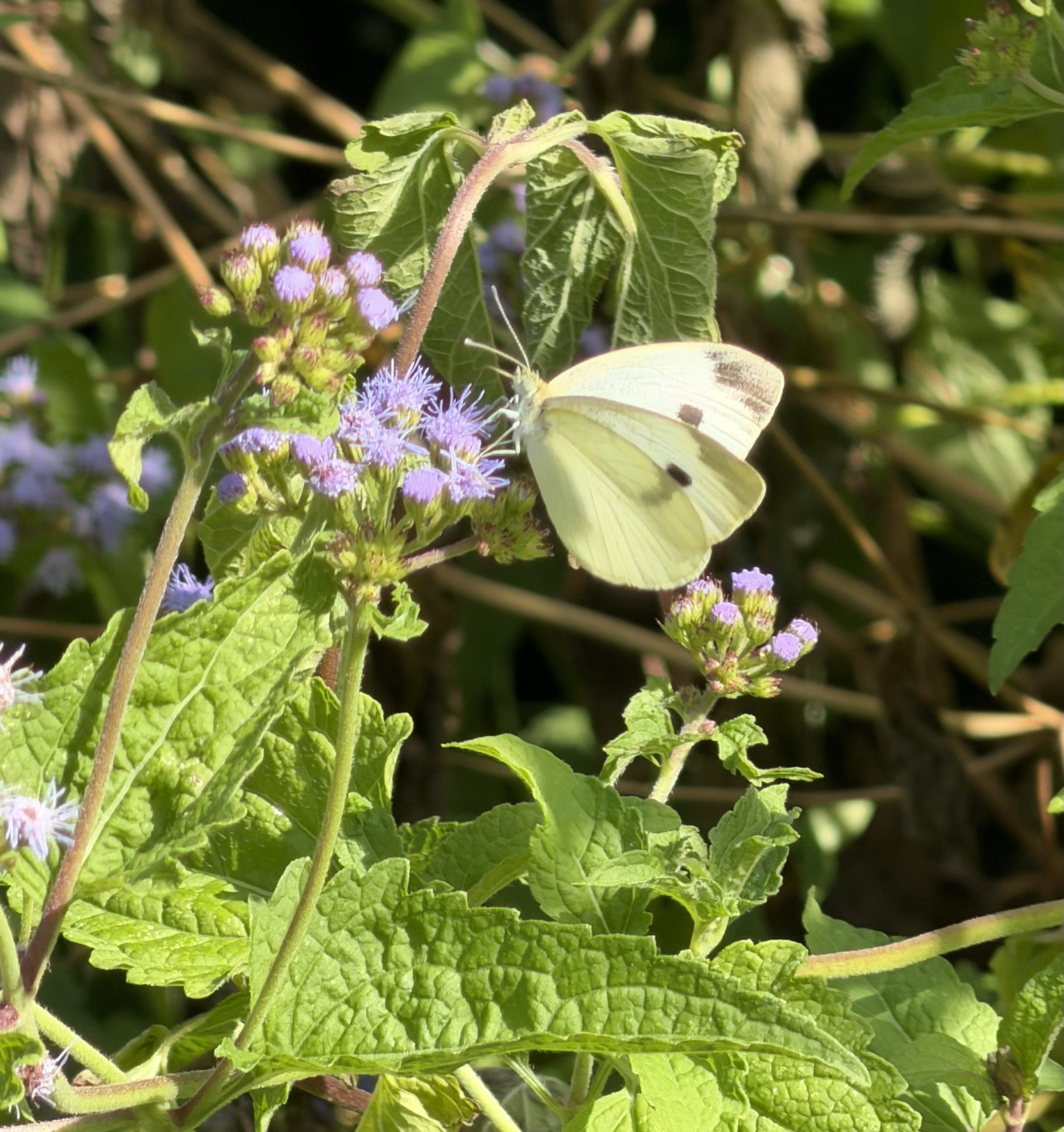
Cabbage white butterfly
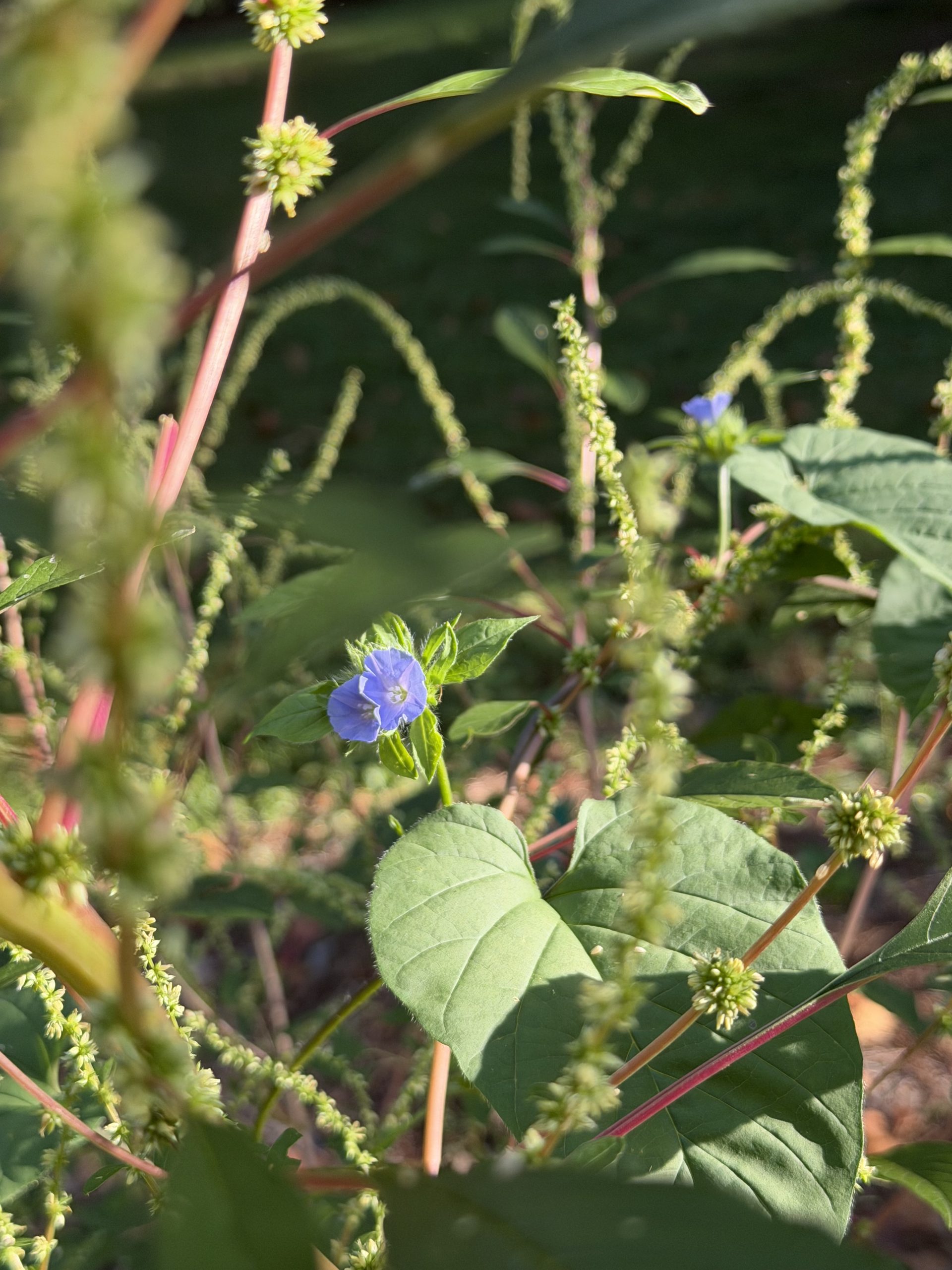
Wild morning glory
I will order the book today! Thanks, and as always, peace, LaMon
I think you will enjoy it, LaMon! It’s always nice to hear from you. Xoxo
Thank you so much for sharing this! I missed Varina’s book signing at church last week and can’t wait to hear her in conversation with Margaret Renkl. How beautiful!
This is a book for you, dear friend. Xoxo
I have started this beautiful book and enjoying it immensely! Varian is a gifted writer.
I am not surprised that you are enjoying it, BK! Yes she is! Xoxo
Profound, and beautifully written, Jennifer.
Thank you – xoxo
I wish I lived in Nashville so I could come hear the talk. Cannot wait to order it!
Hi Sumner! How lovely to hear from you! Thank you for being in touch, and I wish you were here too! Xoxo
I have a commitment that night, or I would be there to hear her talk. I am adding this book to my “want to read” list. What a beautiful prayer she offers. Thank you for sharing it with us. It makes me excited to read the whole book.