What do you do with an extraordinary family story?
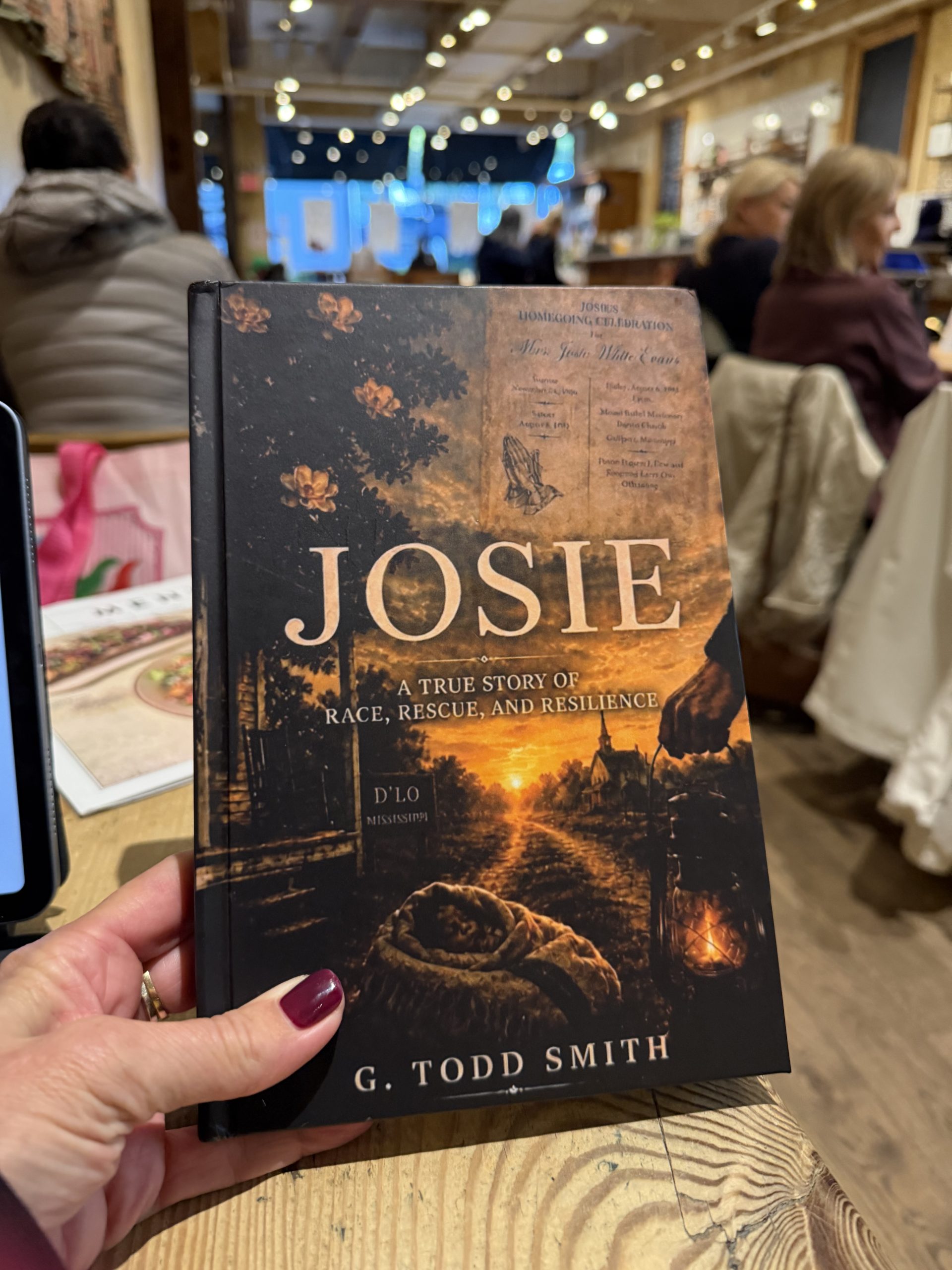
Nashvillian Todd Smith has written a novel.
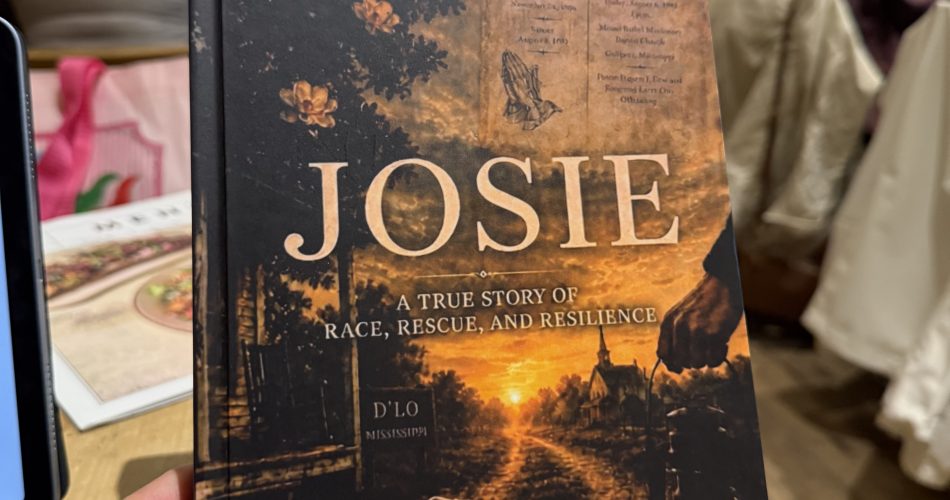
It begins on November 6, 1906, in D’Lo, Mississippi: “The rain came hard that night, rattling the tin rooftops of D’Lo like thrown gravel.” Smith’s grandparents, W.D. and Nora Cook, have settled in for the night in their comfortable home, the fire lit.
Hattie, their housekeeper, has left, but soon there is an urgent rapping at the door. “Mr. Cook!” Hattie cries, “There’s a baby chile in the road!” A newborn, abandoned.
W.D. Cook is a banker and businessman, and his wife Nora recently gave birth to their daughter Mary. They already have a young son, Bill. In a few years, they will welcome another daughter, Jewel. W.D. grabs his coat and rushes outside.
On that rainy night in 1906, W.D. and Nora take in a baby they will raise and claim as their own for life: Josie. In the Mississippi Delta, taking a Black baby into a white home and loving her as you love your own children is unheard of.
Staying close to the facts and his extensive research, Smith imagines what it might have been like for Josie, her parents, and siblings in early twentieth century Mississippi and beyond. His novel honors the Christian faith of his family and the Southern cooking that went on in the kitchen. The old magnolia tree in the backyard beckoned generations of children, including the author himself.
Smith’s characters – always, and explicitly, his family – articulate beautiful truths about love and generosity, but the story cannot help but whisper its pain as well.
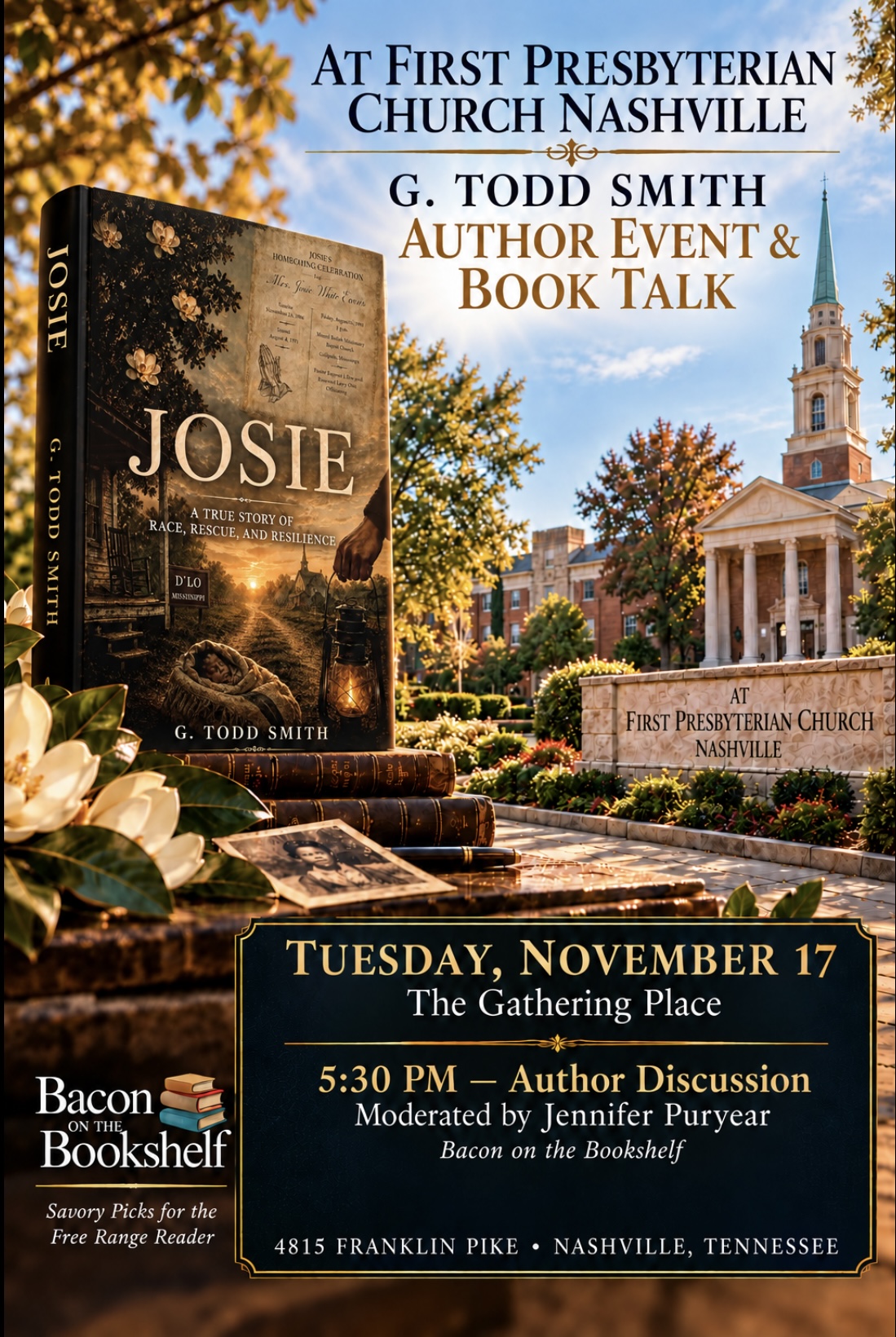
I’ll be talking with Todd on November 17th at First Presbyterian Church in Nashville. Please come join us!