
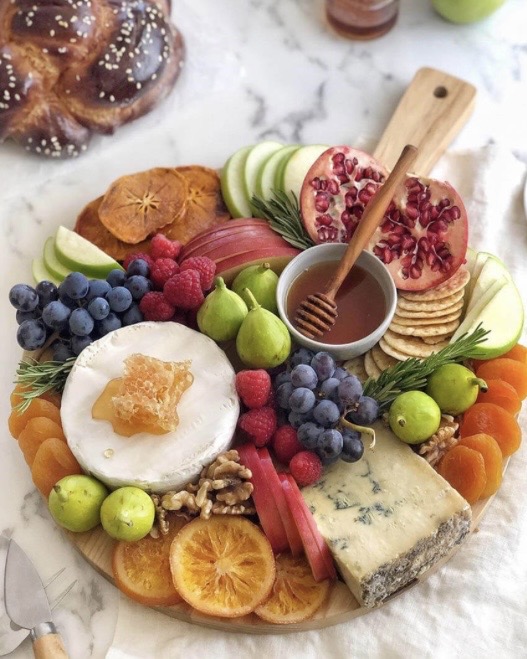
From Errolkadesign on Etsy
I’ve had a longstanding secret crush on the Jewish faith. It started in college, when I had close Jewish friends, several of the male variety. It seemed to me that Southern Baptists (me) and these beautiful Jewish boys had a lot in common but also – not. I was fascinated by them – one a friend, two I kissed, and one I was in class with and admired always, from a distance. I thought I might marry a smart and handsome Jew. Instead, I married a smart and handsome Presbyterian and moved to Nashville with him and became Presbyterian. That marriage ended, but we are cordial and the Presbyterian faith has held up well.
Over the last number of years, I’ve had the chance to get to know Rabbi Laurie Rice and consider her a dear friend. I love it when she sends me her sermons. Today I have the honor of sharing her message for Rosh Hashanah, “My Love Story.”
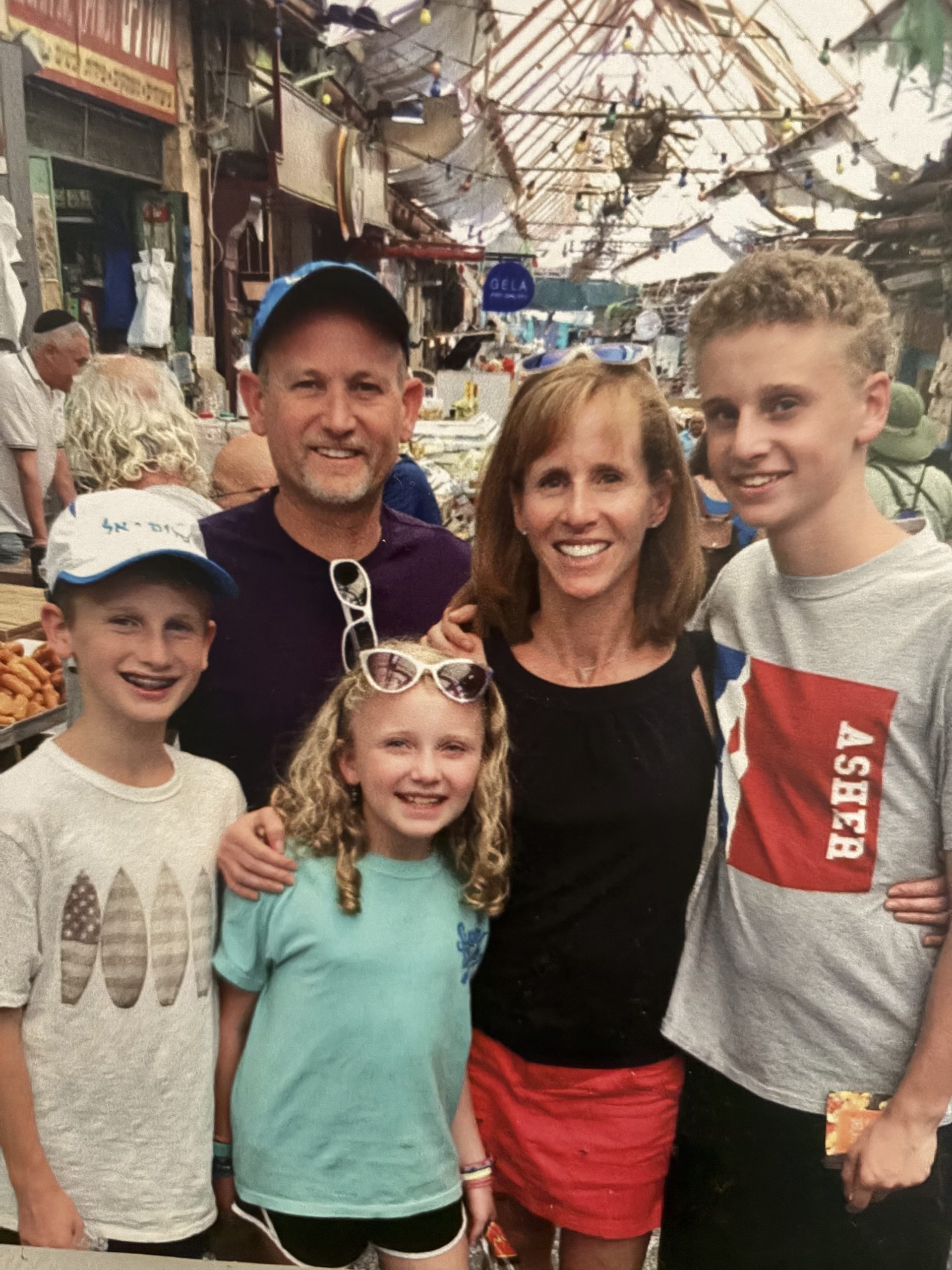
From Laurie:
When I was 20 years old, I spent the summer between my junior and senior year of college in Israel. Without a doubt, had I not spent that summer in Israel, I would not be standing on this bima today. Which is funny because going to Israel wasn’t even the plan. I was a double major at Northwestern University in History and Slavic Languages and Literatures. I took a 9 am class in Russian language, Monday through Friday, for four years, something my now-college and beyond-college-age kids can’t even fathom. “Mom… why???”
My plan was to spend my last college summer in Moscow working for an NGO. I remember feeling really cool when I used that acronym at the time. Most of my friends were heading to graduate school or interviewing with firms like Anderson Consulting, but my plan was to take the Foreign Service exam and go back to Russia… maybe as a spy or something. I was a fan of mystery literature, and I had read my fair share of Russian spy novels, including Nelson DeMille’s The Charm School. I landed a summer internship with the Joint Distribution Committee (the JDC) in their Moscow office, working with Russian Jews who were soon to make aliyah to Israel. You might think this makes great sense, given that I am a rabbi and clearly “into” my Judaism. But when I was 20, it was completely happenstance. That the organization was Jewish really didn’t matter to me much. It was just a way to get to Russia.
The spring of 1993, major unrest erupted in Russia and NGOs suspended sending American volunteers. The JDC asked if I would go to their Jerusalem office to work with newly arrived Russian immigrants. It wasn’t the plan, but it was abroad and I would get to use my Russian… so I said yes. I could end the sermon right here and just say, the rest is history. But it’s only been about 2 minutes, and this is the main sermon slot, so I’ll continue.
What unfolded is what I like to call My Love Story with the Jewish people. I went to college well before the internet or email, so when I was in Israel that summer, I wrote letters. Every day. To my closest friend/sorority sister and fellow member of the tribe, Stephanie. And she saved those letters. And gave them to me earlier this year.
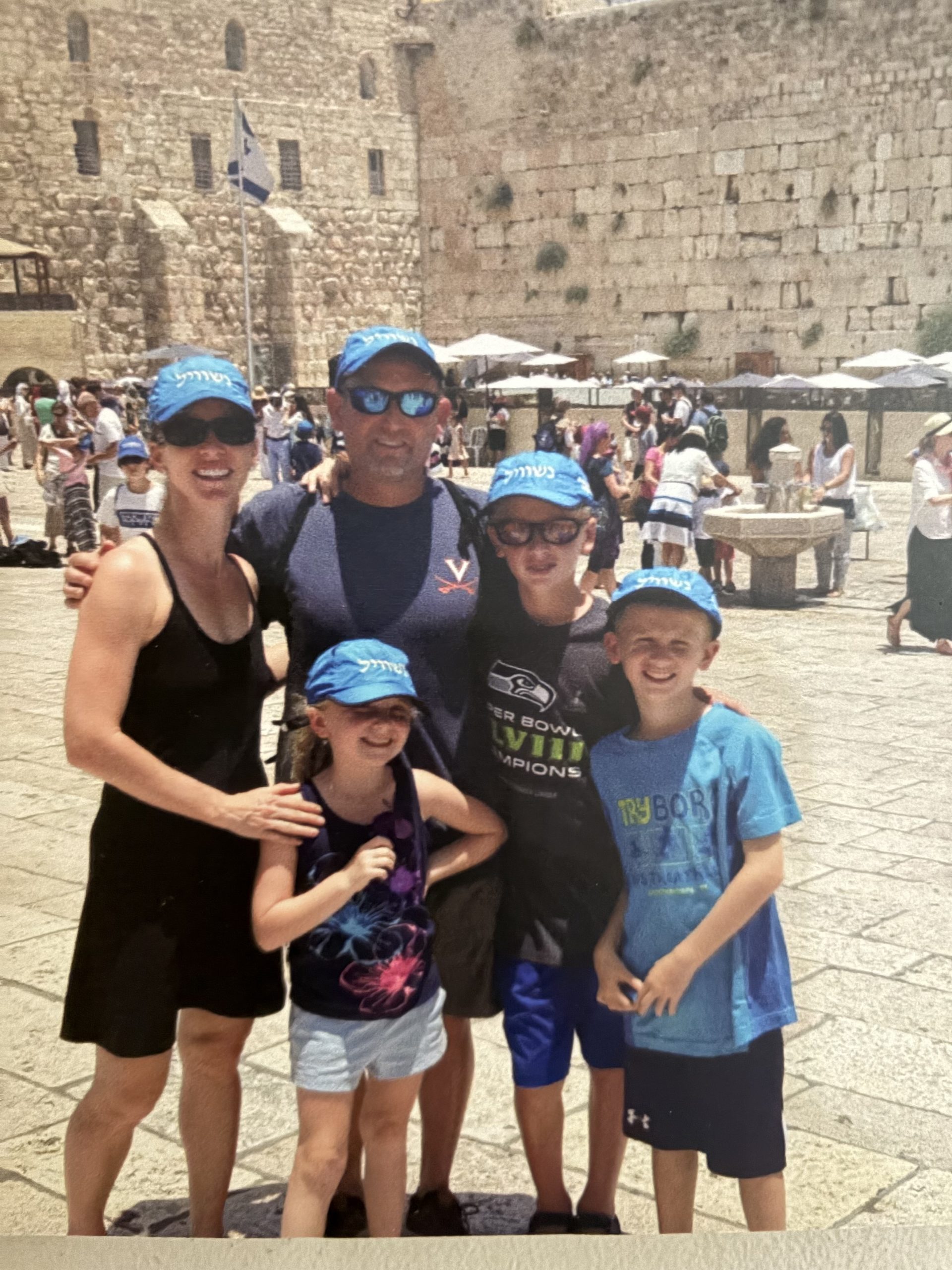
“Dear Steph: I have been to the Old City every day because it is so amazing. Both Friday and Saturday night I went to the Wailing Wall to celebrate Shabbat. It is such an overwhelming feeling. I can’t describe it in words, but going to the wall at around 7:00 at night and watching all the Hassidic men praying like crazy, and watching as the sun sets and the sky grows dark over the wall—it’s the most beautiful thing I’ve ever experienced. It’s so rich in history and SO holy—it makes me so proud to be Jewish. My views towards Judaism are changing so much—I’m not becoming super religious, but I have so much incredible respect for our heritage, traditions, and culture. You have to come here!”
There’s a very awkward, almost cringy feeling reading letters I wrote decades ago, like when we see ourselves in a video. I use the word “so” like some people abuse exclamation points. And yet, I can instantly channel the excitement and energy I felt when I penned those words. I was entranced. By Israel. By Judaism. By being alive in that moment. It was SO magical.
Sarah Tuttle Singer, a mother and writer living in Jerusalem, captured the magic of Jerusalem in an article earlier this year:
“Jerusalem does not do errands politely. You don’t step out for one thing and come back with one thing. You step out and the city hands you a situation. Today’s situation arrives in sheets of rain and a clap of thunder so loud it feels biblical. I duck into the corner grocery store because everyone does.
Inside, we strangers form a temporary society under fluorescent lights. Shoes squeak. Jackets steam. The floor smells like citrus cleaner and coffee and zatar. The clerk stands behind the counter, unmoved. He has seen worse weather, worse governments, worse days. He knows storms pass. People, too.
The line organizer has already appointed herself. She remembers precisely who enters when, who steps outside “just for a second,” and who is lying. Rain is not an excuse for anarchy. She gestures firmly, narrating order into existence. This would never work on a sunny day, but the storm suspends our disbelief that Jerusalemites might listen.
A man paces the aisle, shouting into his phone in fragments and accusations. The thunder punctuates his sentences. Whoever is on the other end is clearly wrong, and the sky agrees. A woman selects candles with calm clarity. This is not panic-buying. This is foresight. Candles are always useful — for Shabbat, power outages, or the end of days. When the lights flicker, she nods, vindicated.
By the freezer stands the interfaith delegation: a rabbi, a priest, and an imam, united by bad timing and shared shelter. It sounds like the beginning of a joke, but no one laughs. They discuss the rain, municipal drainage, and whether this storm is worse than the last one. When thunder cracks, all three look upward at once. Different theologies. Exact same reflex.
A soldier leans against the wall, water dripping from his uniform onto the tile. He waits the way people here learn to wait — quietly, without complaint. A child presses her hands against the freezer glass, delighted. Storms are wonderful when you are small and dry and not responsible for anything. Then there is Tomer from Tinder. We matched once, exchanged a few clever messages lifetimes ago, and then vanished from each other’s lives with impressive efficiency. (I am sure I’m not the only one in the store who recognizes him and pretends not to.)
And THEN there is the man everyone knows as the Come for Shabbos Guy. He is friendly without pressure, observant with genuine care. He has invited half the city for Shabbat at least once. He nods to someone, warm and unsurprised, as if this soggy gathering is exactly where everyone is meant to be. “If you don’t have plans,” he says gently, because that’s how these invitations work here.
Then the thunder hits again — louder, closer — and the credit card machine gives up. Not flickers. Gives up. The clerk sighs. “Cash only,” he says. People groan. Bags are searched. Someone tries to negotiate. The rabbi pays for the priest. The imam pays for the Candle Lady. The Come for Shabbos guy lets the gap-year kid use his phone. Tomer from Tinder swipes right.
Then, slowly, the storm eases. The machine blinks back to life. The line dissolves. People pay, leave, vanish into the city. Outside, Jerusalem resumes itself. I step back into the wet street lighter than I arrived, carrying nothing I planned to buy — but very much aware, once again, of where I am. In Jerusalem, even the corner grocery store knows how to gather a city.”
Sarah’s story reminds me that I didn’t simply fall in love with a place, that summer. I fell in love with a people. And what or who exactly is this “people”? Are we a religion? A race? A nationality? The author of Everybody Loves Dead Jews, Dara Horn, says we are none of those things because we predate every one of those categories. Rather, we Jews are a joinable tribal group with a shared history, homeland and culture. Or, in one simple Hebrew word, we are an am. A people connected by memory, story, argument, ritual, responsibility, and an astonishing sense of belonging across time and geography.
I think I fell in love with the strange and beautiful Jewish idea that you can belong to people you have never met, feel responsible for people who live thousands of miles away, mourn people who died thousands of years ago, and celebrate with people who haven’t even been born yet. One of the great gifts—and challenges—of Jewish peoplehood is that we don’t get to say they very easily.
Israelis? We.
Jews in Ukraine? We.
Jews in Argentina? We.
A Jew with whom we profoundly disagree? Still we.
Perhaps one of the hardest things about being Jewish right now is the word we. We are not all the same. We don’t vote the same way. We don’t practice Judaism the same way. We don’t even agree about what Judaism asks of us. And yet, somehow, we keep saying we. We mourn. We celebrate. We argue. We remember. We worry. We show up. We belong to one another. Every year we stand together—not because we all agree—but because we belong to one another.
And we know that Jewish peoplehood is under tremendous strain. There are Jews who feel alienated from Israel. Jews who feel alienated from American Jews. Jews who feel that other Jews don’t understand them. Jews who feel that Israel is the only thing keeping the Jewish people safe. Jews who feel that Israel is causing profound moral harm. Jews who are exhausted by having to explain themselves. Jews who are frightened by antisemitism. But thankfully, love does not require agreement. In fact, I wonder if the most mature form of Jewish love is not loving the Jewish people when we agree with them. It’s loving them when we don’t. Because if my love for the Jewish people depends on the Jewish people thinking exactly as I do, then I don’t love a people. I love a mirror.
I fell in love with a people who argue because ideas matter. I fell in love with a people who sanctify ordinary moments—with blessings before eating, after eating, upon seeing a rainbow, hearing thunder, welcoming a child, comforting mourners. I fell in love with a people who can carry unbearable grief and still dance. I fell in love with a people who believe memory is a religious act. Love stories mature. Every love story eventually discovers that love is different from infatuation.
When I was twenty, Israel was sunsets over the Kotel. 34 years older and twenty-five years of the rabbinate later… I have buried Holocaust survivors. I have held parents after funerals. I have watched antisemitism return. I have watched Israel become more complicated than my twenty-year-old self could have imagined. I have disagreed with Israeli governments. I have worried about the future of American Judaism. And yet…I love the Jewish people more now than I did then. Not despite knowing more. Because I certainly know more.
Every year we stand together—not because we all agree—but because we belong to one another. Some of you exchanged these words under the wedding chuppah when you married your beloved: Ani l’dodi v’dodi li… I am my beloved’s and my beloved is mine. Traditionally interpreted as the love between God and Israel. This year I hear it differently. I am my people’s.And my people are mine. Or as Ruth said to Naomi: Where you will go, I will go…” Ruth wasn’t born Jewish. She chose to bind her destiny to the Jewish people. Every Jew, in a sense, renews that promise every Rosh Hashanah.
If someone asked you why you still choose to belong to this astonishing, infuriating, resilient, compassionate, argumentative people…What would you say? Would you talk about grandparents? Friday nights? Summer camp? Hebrew school? A song? A funeral? A wedding? The way strangers become family?
When did your love story begin? Not your love story with another person. Your love story with the Jewish people. When did you first feel it? Was it at your grandmother’s seder table? Sitting beside your father in synagogue? Dancing at a wedding? Standing at a shiva? Singing a song you didn’t realize you knew? Maybe it was in Israel. Maybe it was right here at Micah. Maybe it was when someone you loved died and suddenly you discovered that the prayers you thought you didn’t know were somehow already inside you. What was the moment you realized: These are my people?
Then, I was 20. I was changed by Israel. I became a rabbi. I have spent 25 years helping other people enter Jewish life. When I was twenty, I didn’t know that I was walking into a story that had begun thousands of years before me. I thought I was spending a summer in Jerusalem. I didn’t know that Jerusalem was spending a summer inside of me. Maybe this is what it means to belong to a people. We inherit something we did not create, and then we are asked what we will do with it? What does it mean to love a people? It means refusing to reduce them to headlines. It means believing they are worth fighting for. It means choosing covenant over convenience.
If I could write one more letter to that twenty-year-old college student wandering Jerusalem with a backpack and a notebook, I wouldn’t tell her everything that would happen. I wouldn’t tell her about the joy. Or the heartbreak. Or October 7. Or antisemitism. Or becoming a rabbi. I’d simply tell her this: Keep falling in love. Because this people will break your heart. And they will fill it to the brim. They will challenge you. They will inspire you. They will frustrate you. They will remind you that holiness is never created alone. They will become your family. And every Rosh Hashanah, when Jews around the world gather to begin the year once again, you’ll discover that the greatest blessing of your life was not that your plans changed. It was that your heart did.
We make plans, and life redirects us. I thought my future was Russia. God—or fate, or history, or simply providence—had another itinerary. Rosh Hashanah offers such promise but also the awareness of how little of the coming year we can script. Sometimes the greatest blessings arrive disguised as disappointments. A closed door in Moscow opened a gate to Jerusalem, and eventually to this bimah. Everyone in thissanctuary has had a Moscow that never happened and a Jerusalem they never expected. I think Rosh Hashanah is, in many ways, an invitation to trust that the unexpected turns in our lives may yet lead us toward our deepest calling.
My daughter is twenty now. And sometimes I look at her and wonder what I hope for her Jewish life. I don’t necessarily hope that she will have the same experience I had. I don’t need her to fall in love with Israel in precisely the way I did. I don’t need her to become a rabbi. I don’t even need her to agree with me. I hope something simpler. I hope that someday, when she is my age, she will look back and know that she belonged to something bigger than herself. That there were people whose names she never knew who prayed for the same things she prayed for. That there were ancestors whose courage made her life possible. That there were strangers who became family. That there was a people that frustrated her and challenged her and sometimes broke her heart—and that she chose, nevertheless, to love them.
Shanah tovah, my beloved people.”
***
Ain’tTooProudtoMeg.com
Do you have a love story with your faith? What community do you consider yourself most intimately a part of? When you say “we,” who do you mean?
***
Seen in my yard this week….